



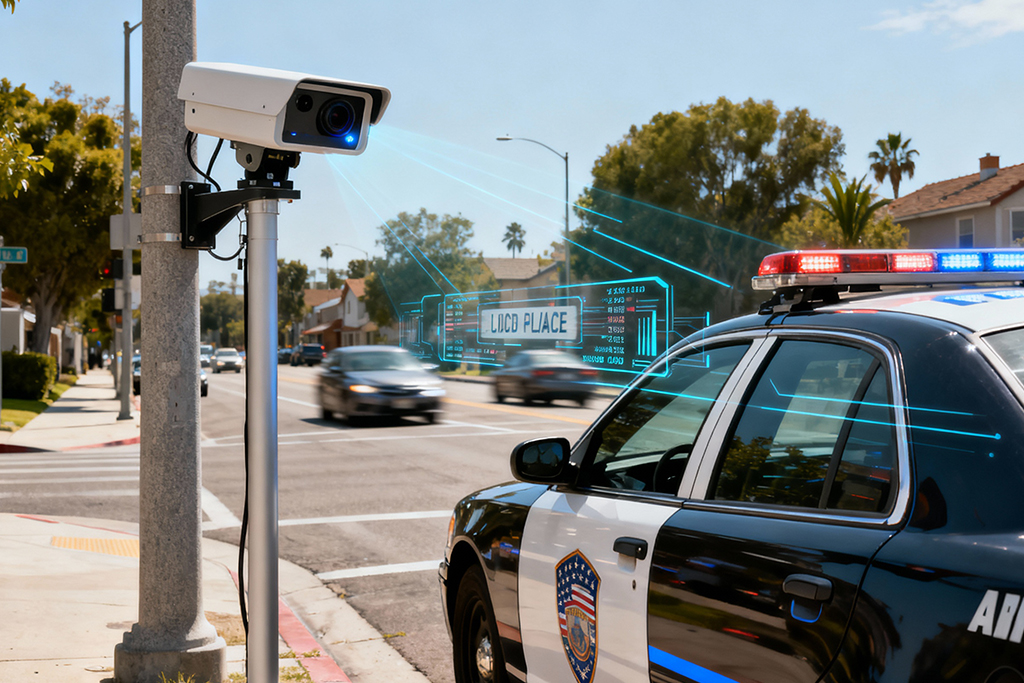
Across Massachusetts, dozens of police departments are deploying AI-powered systems to enhance crime investigations. One prominent technology comes from Flock Safety, cameras that capture every license plate passing by and feed the data through an AI-driven analytics platform. These systems allow officers to track vehicles of interest, generate leads quickly, and focus investigations based on location and timing.
Law-enforcement officials argue that this technology helps modernize policing in the digital age. Former Police Chief John Carmichael noted such tools “can be very effective in helping them do their job.” Yet civil-liberties advocates caution that wide-angle tracking of vehicles may expose sensitive data and broaden surveillance beyond what communities explicitly authorize.
Do Police Use AI to Solve Crimes
Yes, police are increasingly using AI technologies across multiple dimensions of crime-fighting. Here are some of the main applications:
- Automated License-Plate Readers (ALPR): Cameras pick up plates and send alerts if they match stolen-vehicle or wanted-person databases. This gives detectives a faster path to leads.
- AI Police Report Writing: Emerging tools can assist in drafting incident summaries, extracting key facts from video/audio, and flagging missing context, freeing up officers for field work.
- Facial and Vehicle Recognition: Some agencies are piloting systems that match images from CCTV or body-cams to watch-lists, helping identify suspects or missing persons rapidly.
- Data Integration & Predictive Policing: Platforms combine location, pattern, socio-demographic and prior-incident data to forecast where crimes are likely or who may be at risk.
These tools suggest a shift toward more proactive, intelligence-driven policing, where AI helps spot patterns humans might miss.
AI Police Report Writing
A growing number of police agencies are adopting AI-powered tools to help draft incident reports. Programs supported by the COPS Office use AI to transcribe body-worn camera footage and audio, extract key facts, and generate a draft narrative for officers to edit and finalize. According to Police1, this system can cut report time from 90 minutes to just 15–20 minutes, easing paperwork backlogs and letting officers focus more on patrol duties. However, experts and groups like the Digital Watch Observatory caution that these tools can still introduce bias, errors, or traceability issues, making human review essential for accuracy and legal compliance.
AI Police Cameras
The network of AI police cameras now includes tens of thousands of nodes: roadside ALPR units, body-worn cams with image-analytics, and CCTV systems enhanced with real-time object tracking. In Massachusetts, Flock Safety’s platform stores plate data for 30 days and allows departments to search historical movements of vehicles.
However, critics argue the expansion of these AI police cameras raises privacy questions, especially when private property instalments feed data to law-enforcement contracts and multiple agencies can access the same information.
AI Facial Recognition Police
Though not always disclosed publicly, many law-enforcement organisations are experimenting with or deploying AI facial recognition, software that compares live or recorded imagery against face-databases. When used in conjunction with ALPR and other tools, these systems aim to identify suspects faster, monitor persons of interest, and support search efforts for missing or vulnerable individuals.