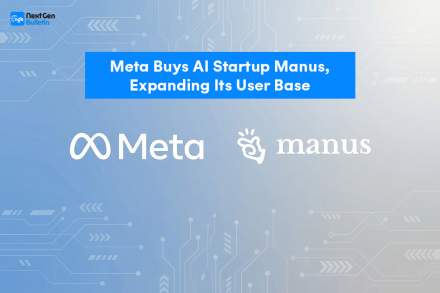



Meta Platforms’ meta AI deal controversy has intensified following revelations about the company’s acquisition of AI startup Manus, which previously had operational ties to China. Executives and investors are now grappling with geopolitical sensitivities and regulatory scrutiny after reports surfaced detailing Manus’s connections to Chinese technical talent and funding sources, raising concerns about foreign influence and national security implications tied to advanced AI systems.
The transaction in which Meta buysthe Manus AI startup for more than $2 billion had already drawn attention because it brings millions of paying users and autonomous agent capabilities into Meta’s broader AI ecosystem. However, the emerging narrative around meta AI acquisition China concerns has shifted discussions toward governance, compliance, and risk mitigation, especially in light of heightened U.S. – China AI competition.
Meta Buys AI Startup With China Ties: Early Red Flags
Manus, a Singapore-based AI company known for its autonomous agent technologies, was built with contributions from engineers and investors who also have roots in China’s tech sector. While the startup had moved parts of its operations out of China prior to the acquisition, internal and external observers caution that connections to Chinese research networks and talent pools could introduce complexity for Meta’s acquisition strategy.
This backdrop has fueled the current Meta AI deal controversy, with lawmakers and policy analysts questioning whether acquiring a company with historical China links could expose Meta to geopolitical or data governance risks, even if the company’s current legal domicile and operations are outside Chinese jurisdiction.
Critics point out that China’s advanced research ecosystem has produced many AI engineers who work globally. But when a major American tech firm like Meta integrates talent or code with past ties to China, regulators in Washington and Brussels may apply stricter scrutiny to ensure there is no undue influence or leakage of sensitive data.

Meta Manus Acquisition China Concerns Escalate
As part of the broader controversy, conversations now focus on how Meta manages artifacts from Manus’s earlier development phases. Sources close to the deal suggest that Meta conducted deep reviews of codebases, IP provenance, and team affiliations at Manus before finalizing the acquisition. However, questions linger about the extent of previous collaborations between Manus and Chinese partners.
The heightened meta ai deal controversy stems in part from a growing appetite by governments, particularly in the U.S. to keep strategic AI technologies and infrastructure within secure borders. Concerns about supply chain integrity, model training data origins, and foreign influence have made deals like Meta’s purchase of Manus subject to unprecedented levels of review.
Officials familiar with the situation indicate that Meta’s legal and compliance teams emphasized that Manus had de-emphasized Chinese operations before acquisition. Nevertheless, because of prior associations and shared talent, watchdogs remain vigilant, applying lessons learned from other AI and technology sectors where supply chain and geopolitical entanglements complicate national policy goals.
Meta Buys Manus AI Startup: Strategic Rationale vs Risks
From a strategic perspective, Meta’s acquisition aimed to accelerate its AI roadmap by integrating Manus’s autonomous agent technology into its product suite. Manus had developed systems capable of executing multistep tasks, such as data synthesis, research automation, and content generation without extensive human oversight. These commercial capabilities, coupled with a large base of Manus AI paying users, made the startup an attractive target for Meta’s broader expansion.
Meta’s leadership has maintained that the acquisition will enhance both consumer-facing and enterprise AI offerings, enabling Meta AI systems to perform tasks ranging from shopping assistance to automated business workflows. But the meta ai deal controversy now adds complexity to how Meta communicates and implements this strategy without alienating regulators or flagging national security concerns.
One ongoing point of debate is whether AI models imported or developed via acquisitions like this should be subject to additional transparency standards or governance assurances, especially when past collaborators have been active in China’s tech ecosystem.
Manus AI China Links: Policy and Perception Challenges
The narrative around manus ai china links has also fueled broader concerns about systemic risk in the AI industry. As AI systems grow more powerful, governments are increasingly wary of how talent flows, intellectual property transfers, and model training ecosystems could create unintended dependencies or vulnerabilities.
For Meta, the controversy has spawned internal discussions about how to future-proof acquisitions and reassure global audiences that its AI initiatives are securely governed. Meta executives have noted publicly that all imported technologies will comply with U.S. export controls, data privacy standards, and industry best practices regardless of historical affiliations.
Nevertheless, stakeholders on Capitol Hill and in EU regulation circles have signaled that acquisitions involving AI startups with past regional ties to China may face closer oversight in the future, potentially affecting deal structures, approval timelines, and post-merger integration policies.
Meta AI Strategy Growth Amid Wider Scrutiny
Despite the current controversy, Meta continues to emphasize its long-term meta ai strategy growth, one that hinges on blending foundational research, product innovation, and commercial viability. The company has been investing heavily in its Superintelligence Labs, AI training infrastructure, and multi-modal generative systems, positioning itself to compete with rivals on both technology and user engagement fronts.
As part of this growth strategy, Meta CEO Mark Zuckerberg has repeatedly argued that having a diverse AI portfolio, including autonomous agents and predictive systems, is vital for future competitiveness. While these strategic goals remain intact, the meta ai deal controversy surrounding the Manus acquisition serves as a cautionary lesson about geopolitical nuance and public perception.
The incident also comes at a time when many policymakers are crafting holistic AI governance frameworks balancing innovation, economic growth, and national security.
Bottom Line
The Meta AI deal controversy over the meta buys AI startup with China ties acquisition of Manus highlights how advanced AI transactions can trigger geopolitical and regulatory complexity. As Meta integrates Manus AI China links into its ecosystem, the company must balance commercial goals with scrutiny over foreign influence and data governance. How Meta addresses these challenges may set precedents for future AI deals in a world increasingly sensitive to geopolitical context and cross-border technology flows.
For ongoing analysis of global AI news and governance debates, visit our homepage.
Frequently Asked Questions:
1. Why is everyone talking about Meta’s latest AI acquisition?
Meta’s purchase of the Singapore-based AI company has sparked heated debate because of the startup’s previous connections to China’s technology ecosystem. Even though the company had already shifted its base away from China before the deal closed, politicians and security experts are raising eyebrows about where the technology originally came from and who helped build it. In today’s tense geopolitical climate, any big tech deal involving AI and China becomes instant front-page news.
2. What makes this AI company so valuable that Meta paid over $2 billion for it?
Think of it this way: most AI chatbots just talk to you, but this platform actually does things for you. The technology can handle complicated jobs from beginning to end—pulling together research, crunching numbers, writing reports, even coding—without someone constantly telling it what to do next. Plus, the startup already had millions of people actually paying to use it every month. For Meta, that’s like buying a Ferrari that’s already winning races instead of building one from scratch.
3. What exactly were the startup’s ties to China?
Here’s where it gets murky. The company employed engineers who had worked in China’s thriving AI scene, and some of its early funding and development involved people connected to Chinese tech circles. It’s not that the company was Chinese-owned or operated, but rather that its DNA included contributions from China’s massive pool of AI talent. The company later relocated to Singapore and distanced itself from Chinese operations, but those original connections are what’s causing all the fuss now.
4. Is this really a security threat or just political theater?
Honestly, it depends on who you ask. Some experts argue there are legitimate concerns about how AI systems built with Chinese collaboration could potentially be exploited or contain hidden vulnerabilities. Others say this is overhyped fear-mongering, pointing out that AI researchers move around the globe constantly and Chinese engineers contribute to tech companies worldwide. The truth probably sits somewhere in the middle—there are real risks worth examining, but the issue also gets amplified by broader U.S.-China tensions.
5. Did Meta know about these China connections before buying the company?
Absolutely. Meta didn’t stumble into this blindly. Their lawyers and security teams reportedly spent months combing through the startup’s code, checking where intellectual property came from, and investigating team members’ backgrounds. They knew the history and apparently decided the technology and user base were worth the potential headache. Whether that was smart business or a miscalculation is the million-dollar question everyone’s debating now.
6. What’s Washington’s problem with this deal?
Politicians are increasingly paranoid—some would say rightfully so—about America’s AI advantage slipping away or being compromised. They worry that buying companies with roots in China’s tech ecosystem could mean backdoors in code, training data that’s been influenced by foreign interests, or even brilliant engineers who might still have loyalties elsewhere. Fair or not, anything involving AI and China automatically triggers alarm bells in Congress these days.
7. How is this different from Google or Microsoft buying AI startups?
The difference is geography and timing. Most AI acquisitions by American tech giants involve companies that are firmly Western in origin and operation. This one’s different because the startup had that Chinese chapter in its history, even if brief. It’s also happening right now when U.S.-China tech competition is at its peak, export controls are tightening, and everyone’s hypersensitive about who controls cutting-edge AI. Ten years ago, this probably wouldn’t have raised any eyebrows.
8. Can Meta actually use this technology or will regulators block it?
There’s no indication the deal will be unwound, but Meta might face restrictions on how they deploy the technology. They’ll likely need to jump through extra hoops proving their security measures are airtight, possibly limit what data the AI can access, and keep regulators in the loop more than usual. Think of it like buying a house but then having to get permission before you can renovate anything—you own it, but you can’t do whatever you want with it.
9. Why didn’t the startup just hide its China connections?
Because that would be illegal and incredibly stupid. In today’s regulatory environment, trying to conceal something like that would guarantee the deal gets torpedoed and possibly result in criminal charges. The startup disclosed everything, moved operations to Singapore to clean things up, and hoped transparency would be enough. Turns out, even being honest about past China ties creates controversy—but at least it’s manageable controversy rather than a federal investigation.
10. What does Mark Zuckerberg think about all this?
Zuckerberg has been pretty bullish, arguing that Meta needs a diverse AI toolkit to compete with rivals like Google and OpenAI. He sees autonomous AI agents as the future and isn’t backing down despite the criticism. His bet is that the commercial benefits and technological leap forward outweigh the political headaches. Time will tell if he’s right, but he’s clearly willing to weather the storm to get his hands on this technology.
11. Should regular people be worried about this?
For most people using Facebook or Instagram, this controversy won’t change anything about your daily experience. The bigger picture is about who controls the AI systems that might run huge chunks of the internet in the future. If you’re generally concerned about tech companies having too much power or foreign influence in American technology, then yeah, this is worth paying attention to. But it’s not like there’s some immediate threat to your personal data because of this specific deal.
12. How does China actually benefit from all this?
China doesn’t directly benefit since the company isn’t Chinese anymore and the technology now belongs to an American corporation. However, critics argue that China’s AI ecosystem gets legitimized when Western companies eagerly snap up startups that were incubated there. It’s a soft power win—proof that Chinese AI talent and innovation are world-class. On the flip side, China also loses because that technology and those engineers are now working for an American competitor.
13. Will this kill future AI deals between U.S. and Asian companies?
It definitely makes them harder. Any American company thinking about buying an AI startup from Asia will now face grueling due diligence requirements, longer approval processes, and intense public scrutiny. That doesn’t mean deals won’t happen, but they’ll be more complicated and expensive to pull off. Smaller companies might not bother, while giants like Meta can absorb the extra costs and regulatory hassle.
14. What happens if Meta can’t adequately address the security concerns?
Worst case scenario? Regulators could force Meta to strip out certain components of the technology, limit how it’s integrated into Meta’s products, or even require ongoing government oversight of the AI systems. They could also block Meta from deploying the technology in sensitive areas like government contracts or critical infrastructure. It’s unlikely Meta would be forced to sell, but they might end up with an expensive acquisition they can’t fully utilize.
15. Is this the new normal for big tech acquisitions?
Absolutely. Welcome to the geopolitical tech era. Any major acquisition involving AI, semiconductors, or other strategic technologies now requires companies to think like diplomats, not just businesspeople. You can’t just evaluate whether the technology is good and the price is right—you also need to consider where it came from, who built it, what governments will think about it, and how it plays into international power dynamics. It’s exhausting, expensive, and probably just getting started.