

What’s Happening in the AI Call Center Space
Will AI Replace Call Centers? Artificial intelligence is reshaping how companies manage customer support. Call centers are shifting from repetitive, script-based operations to AI-powered communication hubs where humans and machines work together.
As reported by the BBC, companies like eBay and NatWest are already using AI to streamline customer interactions. eBay’s tools help agents find information and craft faster responses, while NatWest, through its collaboration with OpenAI, automates simple requests and supports staff with real-time insights for complex cases.
This transformation is also changing job dynamics. Some firms, including Sky and BT, have reduced call center roles as automation grows, but experts say AI is augmenting, not replacing, human agents, creating new opportunities for more skilled, oversight-driven roles.
Volusia County’s AI Assistant
In Florida’s Volusia County, the sheriff’s department introduced an AI assistant named Ava for non-emergency 911 calls. Ava helps residents report issues like potholes, abandoned vehicles, or animal concerns, collecting information and routing urgent matters to live dispatchers instantly.
This system has eased pressure on human operators, ensuring emergency lines stay open for critical calls. It’s a small-scale but powerful example of how AI can support, not replace, human responders.
Will AI Replace Call Centers? : AI in Call Centers

AI systems today can listen, transcribe, and process calls in real time. They help identify caller intent, predict next steps, and route calls more intelligently. This makes customer interactions smoother and less time-consuming.
For instance, many companies now deploy chatbots and virtual agents for first-level support, allowing customers to check account details or reset passwords without human intervention. If the system detects confusion, emotion, or escalation, it transfers the call to a live agent equipped with all relevant context, saving time for both sides.
AI-Powered Agent Assist for International Call Centers
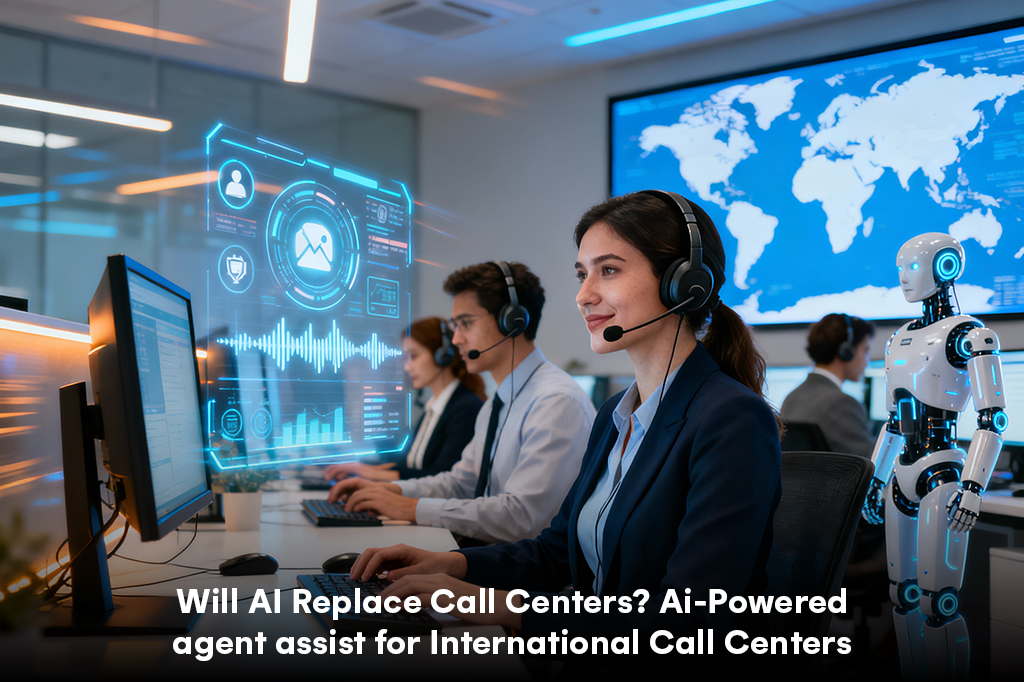
In global operations, AI-powered agent assist tools have become essential. These systems act as real-time copilots, suggesting phrases, surfacing policy details, translating languages, and monitoring tone during conversations.
Imagine an agent in the Philippines helping a caller in Germany. As they talk, the AI listens in, highlights key account information, and prompts the agent with compliant, localized answers. It also provides post-call summaries, reducing administrative work. This combination of speed, consistency, and personalization allows international call centers to maintain quality across time zones and languages.
Still, success depends on balance. The best systems use AI to empower, not overshadow, human agents. When implemented poorly, they can make agents sound scripted or robotic.
AI-Powered Call Centers: The Future of Lead Engagement
Beyond customer service, AI is transforming lead generation and sales engagement. Intelligent call systems can scan databases, initiate outbound calls, qualify leads, and personalize follow-ups automatically.
By analyzing speech and sentiment, AI can determine when a prospect seems interested or hesitant. It then passes the most promising leads to human agents for final conversion. This shift means companies can handle 24/7 outreach at scale, without compromising personalization.
However, experts caution that customers can quickly detect when they’re speaking to an AI. For brands, the challenge lies in blending automation with authenticity to preserve trust and reputation.
AI Impact on Call Centers
The impact of AI on call centers is both economic and human.
- Efficiency gains: Reduced waiting times, faster resolutions, and better data management.
- Workforce evolution: Routine tasks fade, while roles requiring emotional intelligence and problem-solving grow.
- Cost restructuring: Companies can serve more customers with fewer agents.
- Ethical concerns: Continuous call monitoring and voice analysis raise privacy questions.
While AI won’t fully replace human agents, it’s redefining their purpose, shifting from task execution to relationship management. The future of customer engagement will likely be hybrid, where AI handles the routine and humans deliver the empathy.
Final Takeaway
So, will AI replace call centers? Probably not entirely, but it’s changing their DNA. From AI-powered agent assist systems to intelligent lead engagement tools, artificial intelligence is making call centers faster, smarter, and more adaptive.
The next generation of customer service won’t be human or AI, it will be both. Companies that embrace this synergy will lead the way in creating efficient yet empathetic customer experiences worldwide.
Stay informed on how AI is transforming global call centers, from agent-assist tools to automation trends, by visiting our homepage.