Meta Platforms is developing a cutting-edge generative AI initiative featuring Meta Mango AI, a next-generation image and video model designed to compete with OpenAI’s Sora and Google’s multimodal systems. The project is part of a broader suite of innovations emerging from Meta Superintelligence Labs, reflecting the company’s ambitions to secure a stronger foothold in the …
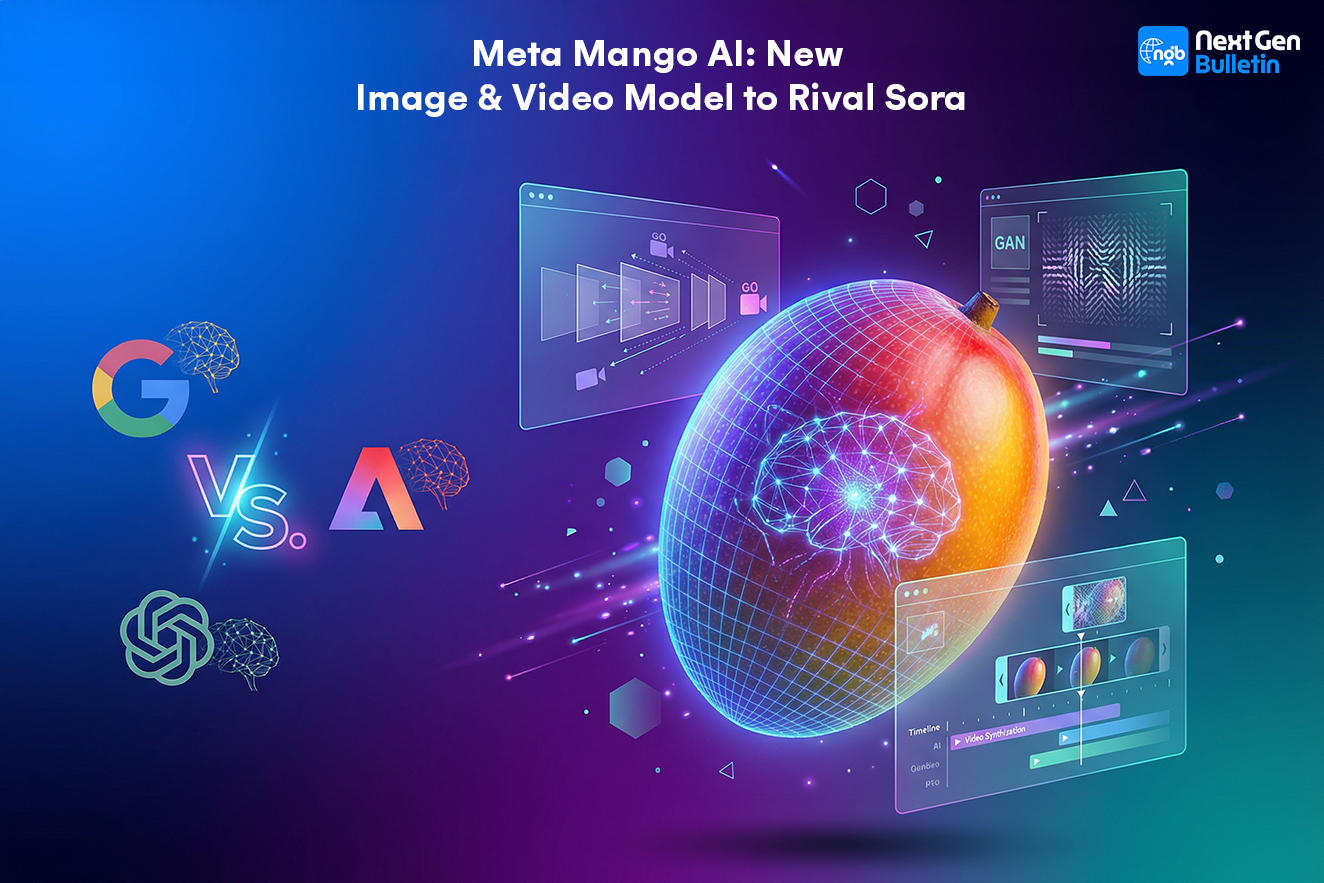
Meta Platforms is developing a cutting-edge generative AI initiative featuring Meta Mango AI, a next-generation image and video model designed to compete with OpenAI’s Sora and Google’s multimodal systems. The project is part of a broader suite of innovations emerging from Meta Superintelligence Labs, reflecting the company’s ambitions to secure a stronger foothold in the rapidly evolving generative AI landscape.
According to sources, Meta is building Mango alongside a powerful text-centric large language model codenamed Avocado AI model, with both expected to debut in the first half of 2026. Together, these models mark a major push into content creation, multimodal reasoning, and deeper integration with social and creator tools across Meta’s platforms.
Meta Mango AI: Image and Video Generation Focus
The centerpiece of this next wave of models is Meta Mango AI, an image and video-focused system that promises high-fidelity creative generation. Unlike Meta’s earlier generative tools, Mango is specifically optimized for producing visual content, including static visuals, sequential frames, and potentially dynamic video from textual or multimodal prompts.
Meta’s internal strategy emphasizes that Mango’s architecture is built to handle complex generative tasks such as scene composition, object motion coherence, and creative visual storytelling. It is expected to rival offerings from OpenAI, such as Sora, which is already established as a text-to-video model capable of generating realistic moving visuals from descriptions.
This development underscores a shift in generative AI competition where image and video generation is becoming one of the most important battlegrounds. Tech firms recognize that immersive multimedia models will drive user engagement far beyond traditional text-only interfaces.
Meta Superintelligence Labs Powers Next-Gen AI
The Meta Superintelligence Labs division is leading this effort, anchored by Chief AI Officer Alexandr Wang and a team of AI researchers and engineers recruited from top institutions and competitors. The establishment of this dedicated division reflects Meta’s desire to accelerate its AI roadmap and compete more directly with OpenAI and Google.
Superintelligence Labs is also responsible for the development of Avocado AI model, a next-generation text and coding-oriented large language model (LLM). While Mango will focus on rich visual generation, Avocado is designed for deep reasoning, coding support, and possibly early explorations in world models, AI systems that understand environments by integrating text and visual learning.
Meta’s internal efforts are part of a broader strategy that saw the company restructure its AI teams earlier this year and recruit dozens of specialists from rivals. This talent push is intended to ensure Meta’s models are competitive in performance, safety, and real-world application.
Mango vs. OpenAI Sora and Gemini Competitors
As development advances, attention is turning to how Mango vs. OpenAI Sora comparisons might shape up once the models reach public release. Sora, developed by OpenAI, is a mature text-to-video generator that can produce cinematic and photorealistic content from prompts, a capability that quickly gained traction among creators.
Meanwhile, Google’s video and image generation systems (such as those in its Nano Banana family) have also improved rapidly, signaling strong competition in the AI world models arena where contextual understanding and creative output are key differentiators.
Meta Mango AI will need to demonstrate strengths in creative flexibility, multimodal understanding, and integration with user tools if it is to stand out. Because visual generation often demands more computational and architectural complexity than text generation, the success of Mango could signal a major milestone for Meta’s generative AI strategy.
Avocado AI Model: The Companion to Mango
Alongside Mango, Meta is developing the Avocado AI model, a large language model expected to elevate text and coding tasks. While Mango tackles image and video creation, Avocado is being positioned as Meta’s most advanced LLM yet, capable of reasoning, understanding complex queries, and possibly aiding in software generation workflows.
Together, Mango and Avocado reflect a dual-pronged strategy: pairing strong multimodal visual capabilities with a powerful text and reasoning backbone. This mirrors the competitive landscapes of other AI platforms where text and visual systems are increasingly merged to offer more seamless user experiences.
Why Meta’s Mango Matters for Enterprise and Creators
The introduction of Meta Mango AI is expected to have wide implications for businesses, developers, and content creators:
- Enhanced generative tools for social media content on Reels, Stories, and Ads
- Advanced APIs for developers to integrate high-quality visuals into apps
- Creator monetization through richer AI-assisted workflows
- Enterprise solutions for marketing, design, and media production
By incorporating deep generative visuals, Meta hopes to offer creators tools that rival those from OpenAI and Google, making the production of professional-grade content more accessible.
Bottom Line
Meta’s development of the Meta Mango AI model, together with the accompanying Avocado AI model and backed by Meta Superintelligence Labs, represents a major strategic push in the generative AI arms race. With expectations of an early 2026 launch, Mango is poised to challenge OpenAI’s Sora and Google’s systems in image and video generation, expanding the capabilities and applications of AI for creators and enterprises worldwide.
Stay updated on next-gen generative AI models at our homepage.
Frequently Asked Questions (FAQs)
What is Meta Mango AI?
Meta Mango AI is an upcoming visual content generator that Meta’s been working on behind the scenes. Think of it as Meta’s answer to all those impressive text-to-video tools we’ve been seeing lately. The model is specifically built for creating both images and videos, which sets it apart from Meta’s earlier AI experiments that were more general-purpose. What makes Mango interesting is that it’s designed to handle the really tricky stuff in video generation—like making sure objects move naturally and scenes flow together coherently. Meta’s aiming to launch it sometime in the first half of 2026, though we all know how tech timelines can shift.
How does Meta Mango AI differ from OpenAI’s Sora?
That’s the million-dollar question everyone’s asking. Both are tackling the text-to-video challenge, but Meta seems to be taking a slightly different approach with Mango. From what we know, Mango is being optimized for things like scene composition and visual storytelling, which could give it an edge in certain creative applications. The biggest practical difference will probably be how Mango plugs into Meta’s ecosystem—imagine generating video content directly within Instagram or Facebook’s creative tools. Of course, we won’t really know how they stack up until Mango actually launches and people can test them side by side in real-world scenarios.
What is Meta Superintelligence Labs?
Meta Superintelligence Labs is essentially Meta’s dedicated AI powerhouse. The company set up this division to really go all-in on advanced AI development, and they’ve brought in Alexandr Wang as Chief AI Officer to lead the charge. It’s not just a rebranding exercise either—Meta has been actively recruiting top talent from competitors and research institutions to staff this lab. The team is responsible for both the Mango and Avocado projects, which tells you how serious Meta is about catching up (or even leapfrogging) competitors like OpenAI and Google in the generative AI race.
What is the Avocado AI model?
Avocado is Mango’s partner in crime, so to speak. While Mango handles all the visual stuff, Avocado is Meta’s play for a truly powerful large language model. It’s being built for text generation, coding assistance, and complex reasoning tasks—basically the bread and butter of modern LLMs. What’s intriguing is that Meta might be exploring something called “world models” with Avocado, which would let the AI understand environments by combining text and visual learning. The two models launching together makes sense strategically—you get the visual firepower of Mango paired with the reasoning capabilities of Avocado.
When will Meta Mango AI be available to the public?
Based on the latest information, Meta is targeting the first half of 2026 for both Mango and Avocado. But let’s be honest—anyone who follows tech knows that release dates are more like educated guesses than guarantees. We don’t have specifics yet on whether it’ll be a gradual rollout or a big-bang launch, and Meta hasn’t said much about which user groups might get early access. My guess? We’ll probably see a limited beta first before it goes mainstream, but that’s just speculation at this point.
Who can benefit from using Meta Mango AI?
The short answer is: a lot of people. Content creators are the obvious winners here—anyone making Reels, Stories, or social media ads will have some powerful new tools at their disposal. But it goes way beyond that. Marketing teams could use it for campaign visuals, designers might incorporate it into their workflows, and developers will likely get API access to build Mango’s capabilities into their own apps. Small businesses and enterprises alike could benefit, especially if they’re looking to produce professional-looking video content without massive production budgets. Really, anyone who needs to create visual content quickly and doesn’t have a full production team on standby stands to gain something.
Will Meta Mango AI be free to use?
Nobody knows yet, and Meta’s been pretty quiet about pricing. If I had to guess based on how Meta usually operates, we’ll probably see some free tier integrated into their existing platforms—maybe with limitations on usage or output quality. For power users, developers, and businesses, there will likely be paid tiers with more features and higher usage limits. API access for developers will almost certainly come with its own pricing structure. But until Meta makes an official announcement, we’re all just guessing.
What makes Meta Mango AI different from other Meta AI tools?
The key difference is specialization. Meta’s previous AI tools were more jack-of-all-trades, trying to do a bit of everything. Mango is laser-focused on one thing: creating high-quality visual content. It’s been engineered from the ground up to handle the unique challenges of image and video generation—things like maintaining consistency across frames, creating believable motion, and building complex scenes. This isn’t just a feature add-on to an existing model; it’s a dedicated system built for one purpose. That level of specialization usually translates to better performance in its specific domain compared to more generalized tools.