Meta Platforms has formally confirmed plans for the Meta Hyperion data centre, a multi-gigawatt facility in Louisiana designed to house next-generation AI systems and significantly expand the company’s meta ai infrastructure expansion strategy. The announcement underscores Meta’s commitment to building one of the largest dedicated AI compute hubs in the United States, one capable of …
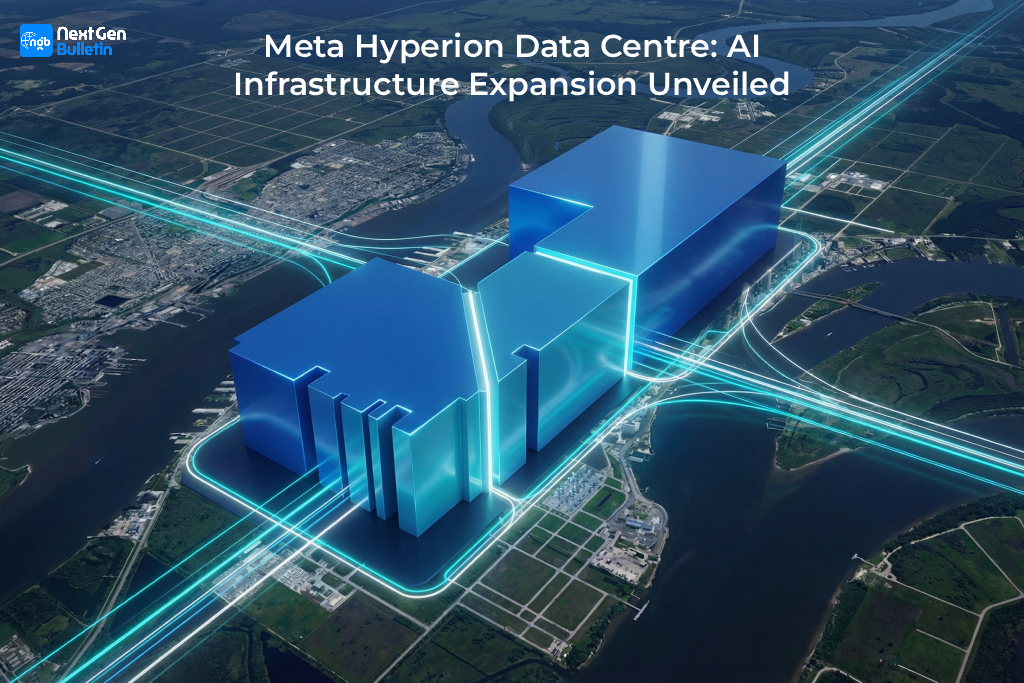
Meta Platforms has formally confirmed plans for the Meta Hyperion data centre, a multi-gigawatt facility in Louisiana designed to house next-generation AI systems and significantly expand the company’s meta ai infrastructure expansion strategy. The announcement underscores Meta’s commitment to building one of the largest dedicated AI compute hubs in the United States, one capable of supporting extensive training workloads and future requirements for artificial intelligence research and product deployment.
The initiative reflects a broader industry shift toward physical infrastructure that meets the escalating demands of large-scale models and high-performance workflows, areas where Meta has been investing heavily in recent years. With AI systems growing in complexity and computational appetite, robust facilities like Hyperion are seen as indispensable for maintaining competitive edge in the global AI race.
Meta AI Infrastructure Expansion: Multi-Gigawatt Ambitions
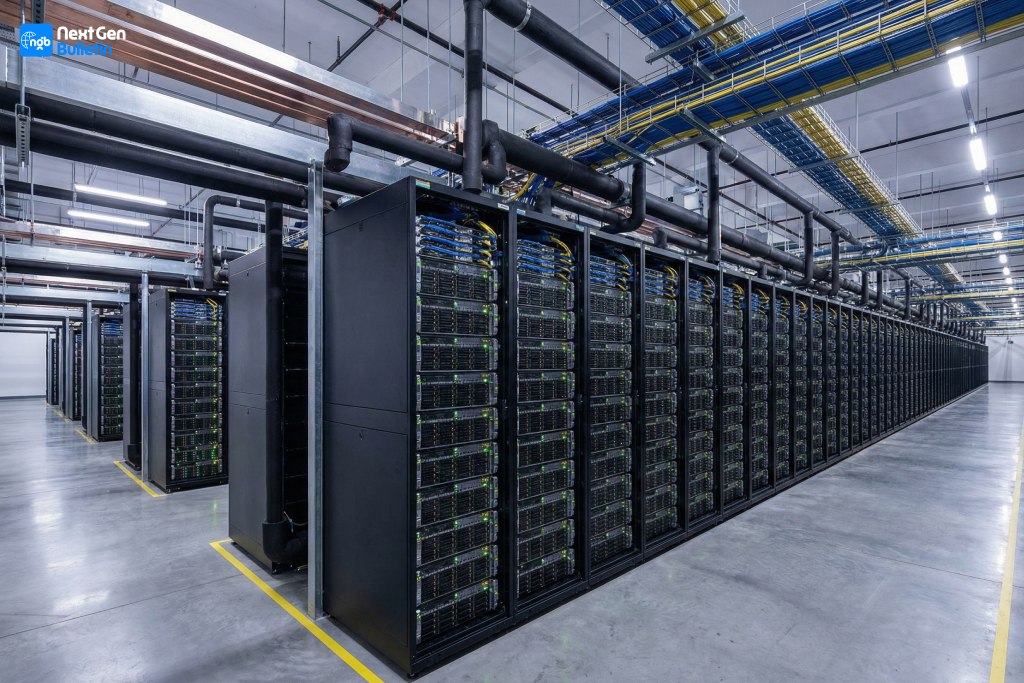
Meta’s strategic roadmap hinges on a significant meta ai infrastructure expansion, and the Hyperion project is a cornerstone of that effort. The data centre will feature multiple plant expansions, leading to a multi gigawatt AI data centre footprint once fully operational. This capacity is intended to support latency-sensitive, high-throughput training and inference workloads, reducing reliance on third-party cloud providers while offering tailored environments for Meta’s internal and developer ecosystems.
A spokesman for Meta explained that Hyperion’s design accommodates future scaling, including support for advanced cooling technologies, optimized power distribution, and redundant networking all of which are essential for resilient, large-scale AI operations. The choice of a multi-gigawatt buildout signals Meta’s intent to support Summit-class AI training systems and beyond, positioning Hyperion as a flagship AI hub within the company’s global infrastructure portfolio.
Hyperion Data Centre Louisiana: Strategic Location
The Hyperion data centre Louisiana site was selected for its access to stable, high-capacity power grids, proximity to fiber backbones, and supportive regional economic policies that incentivize tech infrastructure development. Louisiana’s energy resources, including low-cost, reliable grid connections and access to renewable sources, make it an attractive choice for power-intensive operations such as AI training clusters.
Local officials have embraced the project as a significant economic driver, highlighting potential job creation, tax revenue benefits, and regional tech ecosystem growth. While construction timelines remain subject to permitting and supply chain lead times, early groundwork is underway, with emphasis on preparing power and network interconnects capable of sustaining the eventual multi-gigawatt load.
By situating Hyperion in Louisiana, Meta is benefiting from both geographic advantages and a strategic positioning that reduces risk for supply bottlenecks and long-haul data latency, a key consideration for real-time AI workflows and global access patterns.
Blue Owl Capital Joint Venture Underpins Funding
The Blue Owl Capital joint venture plays a critical role in advancing the Hyperion project. Meta and Blue Owl Capital have partnered to structure financing that blends private investment with institutional capital, accelerating the buildout and allowing Meta to balance operational priorities while securing dedicated compute capacity.
Blue Owl’s involvement brings additional financial firepower and expertise in infrastructure investment, enabling long-term commitments to expansive AI facilities. Under the terms of the venture, Meta retains operational control of AI clusters and networking, while shared financing reduces capital constraints, enabling faster deployment schedules and iterative expansions as technology evolves.
This joint venture model has become more common as tech firms confront capital-intensive infrastructure requirements particularly for AI, where compute density, cooling systems, and power distribution account for substantial upfront and ongoing expenditures.
Multi Gigawatt AI Data Centre Capabilities
A multi gigawatt AI data centre like Hyperion is distinct from traditional cloud or enterprise data centres due to its concentrated focus on AI workloads. These facilities require:
- High-density compute racks capable of supporting thousands of GPUs or custom AI accelerators
- Advanced power distribution systems that support tens to hundreds of megawatts per hall
- Innovative cooling technology, including liquid immersion and evaporative systems to manage heat from sustained heavy compute
- Redundant connectivity and fiber backbones for multi-region data synchronization and failover
Meta plans to leverage Hyperion’s capacity to serve both internal AI research teams and external developer access via APIs and cloud partnerships. This approach could eventually make Hyperion a shared platform for model training, inference, and data processing across multiple AI domains.
Meta AI Training Infrastructure and Model Scaling
The primary purpose of Hyperion is to support meta ai training infrastructure at scale. Training large models, especially multimodal systems and generative networks requires extensive GPU hours, large memory channels, and optimized interconnects for distributed computing. Hyperion’s build is tailored to these needs, providing hardware and software layers that massively reduce training times and power cycles.
Meta’s ongoing research in areas like multimodal learning, efficient inference, and advanced representation models is expected to benefit directly from Hyperion’s capabilities. By internalizing more of its compute capacity, Meta aims to reduce dependence on public cloud environments, lower long-term operational costs, and protect strategic advantages in model development and deployment.
This infrastructure will also support collaborative research initiatives, making it possible for Meta to participate in multi-institution model training experiments and benchmarking efforts, often in partnership with academic groups and technology consortia.
Economic and Technological Impact
Meta’s commitment to projects like Hyperion reflects broader trends in the industry where investment in dedicated AI hardware campuses is no longer optional, it is essential. Companies that successfully build and operate large-scale infrastructure are better positioned to iterate quickly, protect proprietary development, and deliver scalable experiences to end users.
For Louisiana, Hyperion is expected to bring both short-term construction jobs and long-term high-tech employment opportunities, aligning with future workforces trained in AI, systems engineering, and high-performance computing administration.
From a technological perspective, Hyperion exemplifies a shift from cloud-centric AI workflows toward specialized hardware clusters optimized for AI, enabling real-time experimentation, faster model iteration, and reduced cost per compute objective.
Bottom Line
The Meta Hyperion data centre marks a major milestone in meta ai infrastructure expansion, showcasing a multi gigawatt AI data centre in Louisiana backed by a Blue Owl Capital joint venture. With an emphasis on power, scalability, and next-generation compute, Hyperion is poised to become a flagship hub for meta ai training infrastructure, enabling faster model development and deeper research in an AI-driven future.
Stay updated on global AI infrastructure developments at our homepage.