Italy Meta AI ban represents a landmark antitrust ruling that forces Meta Platforms to reverse its policies prohibiting rival AI chatbots on WhatsApp. This groundbreaking decision marks a major development in AI and competition law, fundamentally changing how messaging platforms integrate artificial intelligence tools. The Italy Meta AI ban emerged from an extended meta antitrust …

Italy Meta AI ban represents a landmark antitrust ruling that forces Meta Platforms to reverse its policies prohibiting rival AI chatbots on WhatsApp. This groundbreaking decision marks a major development in AI and competition law, fundamentally changing how messaging platforms integrate artificial intelligence tools. The Italy Meta AI ban emerged from an extended meta antitrust investigation Italy conducted by the country’s Competition Authority (AGCM), which examined whether Meta’s restrictive policies on third-party bots unlawfully suppressed competition and stifled innovation in the messaging platform ecosystem. Following months of scrutiny, regulators determined that Meta’s closed-environment approach unfairly limited consumer choice and prevented rival AI developers from competing on equal footing within WhatsApp’s vast user base.
Under the ruling, Meta must ensure that third-party developers are allowed to deploy rival AI chatbots on WhatsApp, including potential integration with services powered by models like ChatGPT. The regime shift comes amid broader concerns about monopolistic practices by major tech companies and how AI tools are integrated into everyday communications.
The ruling triggers what many legal observers are calling a significant expansion of consumer choice, one that could allow users to ask questions, generate content, or interact with AI assistants from outside Meta’s ecosystem directly inside WhatsApp.
Rival AI Chatbots on WhatsApp Need Access
Prior to the ruling, Meta’s policies restricted the use of any non-Meta AI assistants within WhatsApp, effectively creating a closed environment where Meta’s own AI tools were prioritized. With the Italy Meta AI ban in effect, developers should now be able to build and integrate rival AI chatbots on WhatsApp, opening the door to services powered by OpenAI’s ChatGPT, Google’s Gemini, or other LLMs.
This change could allow users to point a chatbot plugin to their conversations or ask a separate bot for analysis, for example, summarizing long threads, translating multilingual texts, or generating smart replies. Such bots could operate side-by-side with Meta’s built-in assistants, giving users choice and competition right within the chat interface.
Industry insiders say the move could spur a new wave of messenger-based AI development, with third-party providers creating bots that answer questions, assist with scheduling, or even offer specialised services such as legal or medical triage all accessible from WhatsApp.
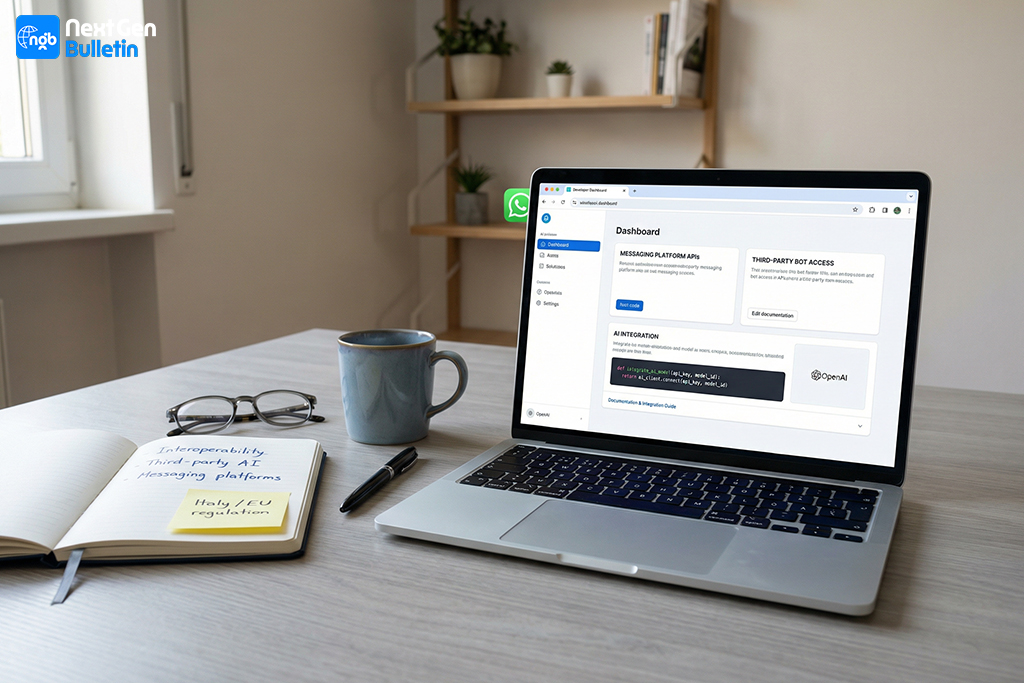
WhatsApp Business AI Update 2025 and Platform Openness
The ruling comes at a time when Meta is already rolling out a broader WhatsApp Business AI update 2025, intended to bring generative AI features to business accounts for customer support, automated responses, and chatbot services. However, until now the company maintained strict control over which AI models could operate on its platform.
With Italy’s order, the business update could see an extension where rival AI chatbots on WhatsApp can integrate with enterprise workflows where customer service bots from multiple vendors help respond to inquiries, complete transactions, or triage support requests. This could bring AI competition to both personal and business usage, enhancing flexibility and lowering vendor lock-in.
Whether Meta will adjust its global policies in response or only implement the change in Italy remains uncertain, but legal experts believe the precedent could influence regulators in other regions, including the EU and North America.
Meta Antitrust Investigation Italy: Background
The ruling followed a months-long review by Italy’s Competition Authority (AGCM), which examined Meta’s terms of service and restrictions preventing outside AI bots from operating in WhatsApp. Investigators found that the rules disproportionately favored Meta’s own AI tools, potentially harming competition and consumer choice.
Under the meta antitrust investigation italy, the Authority determined that preventing integration of third-party AI assistants might violate competition standards and harm users by limiting innovation. As a result, Meta has been ordered to change its policies and ensure interoperability with rival AI chatbots on WhatsApp.
Tech companies are watching closely, as this move could influence how AI integration and competition law intersect beyond Italy’s borders.
Can I Use ChatGPT on WhatsApp? The New Reality
One of the most immediate questions users are asking is: “Can I use ChatGPT on WhatsApp?” Under the updated rules triggered by the Italy Meta AI ban, the answer may soon be yes at least in jurisdictions where the policy change is implemented.
With new access, developers could build ChatGPT-powered bots where users type prompts and receive answers directly within a chat thread. This would eliminate the need to switch between the WhatsApp app and separate AI assistants, streamlining workflows and creating new use cases for on-message-platform AI.
Some bot frameworks already allow bridging between WhatsApp and external services, but Meta’s policy change could standardise and officially support multi-vendor chatbot access making solutions like ChatGPT on WhatsApp native features rather than hacky workarounds.
Meta AI vs Third Party Chatbots: Open Competition Ahead
The Italy Meta AI ban fundamentally alters the dynamic between Meta AI vs third party chatbots on WhatsApp. Previously, Meta’s own AI offerings were front and center, with limited room for complementary or competing tools. Now, opening the protocol to external developers enables a marketplace of bots where competition could spur innovation and varied user experiences.
One immediate implication: users may be able to choose between Meta’s native AI assistant, a ChatGPT-powered bot, or even a specialized AI from niche developers (e.g., health-focused AI bots, educational bots, or productivity aides). This competition could elevate quality and give users control over which models they prefer.
Regulated openness may also reduce lock-in, forcing Meta to innovate faster in its own AI offerings and optimize its performance against rising third-party competitors.
Global Implications of the AGCM Meta WhatsApp Ruling
Italy’s AGCM ruling known broadly as the AGCM Meta WhatsApp ruling may serve as a test case for other regulators around the world. Countries exploring digital markets laws and AI oversight may look to Italy’s decision as a roadmap for how to balance competition with platform governance.
If similar rulings appear elsewhere, Meta could face pressure in multiple regions to adjust its infrastructure and policies to ensure cross-model interoperability, standardized API access, and protections for user security and privacy when using rival AI chatbots on WhatsApp.
Industry analysts believe that if Meta successfully implements this change in Italy, the company may roll it into a global policy shift to harmonize WhatsApp’s capabilities worldwide, a move welcomed by developers and consumer rights advocates alike.
Bottom Line
Italy’s bold meta ai ban borne out of the meta antitrust investigation italy has the potential to reshape WhatsApp’s AI integration strategy by forcing Meta to open its platform to rival AI chatbots on WhatsApp. With the possibility that users might soon be able to use ChatGPT on WhatsApp, and with important updates like the WhatsApp Business AI update 2025 on the horizon, the AI messaging landscape could become far more competitive and innovative. The AGCM Meta WhatsApp ruling sets the stage for broader debate over Meta AI vs third party chatbots and may influence global regulatory approaches to AI integration.For ongoing developments in AI policy and messaging platform innovation, visit The AI Insider.
Frequently Asked Questions
Q: What exactly is the Italy Meta AI ban?
A: The Italy Meta AI ban isn’t actually a ban on Meta’s AI – it’s a ruling that bans Meta from blocking rival AI chatbots on WhatsApp. Italy’s antitrust authority (AGCM) found that Meta was unfairly preventing third-party AI assistants from working on WhatsApp, giving its own AI tools an unfair advantage. Now Meta has to open up WhatsApp to allow competing AI chatbots like ChatGPT to integrate with the platform.
Q: Can I finally use ChatGPT directly in my WhatsApp conversations?
A: Soon, yes! Once Meta implements the required changes, developers should be able to create ChatGPT-powered bots that work directly inside WhatsApp. This means you’ll be able to ask ChatGPT questions, get help with tasks, or even summarize long message threads without leaving the app. However, it depends on when developers build these integrations and whether Meta rolls out the changes globally or just in Italy initially.
Q: Why did Italian regulators force Meta to make this change?
A: Italy’s Competition Authority determined that Meta was acting anti-competitively by blocking all non-Meta AI assistants from WhatsApp. This created a monopoly where only Meta’s AI could operate, which limited innovation and consumer choice. Regulators found this violated fair competition standards, so they ordered Meta to open the platform to rival AI chatbots to give users more options.
Q: Will this ruling affect WhatsApp users outside of Italy?
A: That’s the big question everyone’s asking. Legally, the ruling only applies to Italy right now. However, Meta might choose to implement these changes globally rather than maintaining different systems for different countries. Plus, other regulators in the EU and beyond are watching closely and could issue similar rulings, potentially creating a domino effect that opens up WhatsApp worldwide.
Q: How will this affect WhatsApp Business accounts?
A: This could be huge for businesses! Right now, Meta is rolling out its WhatsApp Business AI update for 2025, but businesses have been limited to Meta’s AI tools. With this ruling, businesses could integrate customer service bots from multiple vendors, use specialized AI for different tasks, and avoid being locked into a single AI provider. This means better flexibility and potentially lower costs for companies using WhatsApp for customer support.
Q: What kinds of third-party AI chatbots might become available on WhatsApp?
A: The possibilities are really exciting. Beyond ChatGPT, you might see Google’s Gemini, specialized medical or legal advice bots, educational tutors, productivity assistants, language translation tools, and industry-specific AI helpers for finance, travel, or shopping. Basically, any AI developer could create a bot to work within WhatsApp, giving users a whole marketplace of AI assistants to choose from.
Q: Does this mean Meta’s own AI assistant is going away?
A: Not at all. Meta’s AI will still be available on WhatsApp – it just won’t be the only option anymore. In fact, competition from rival chatbots might push Meta to improve its own AI even faster to stay competitive. Users will simply have the choice between Meta’s built-in AI or third-party alternatives, depending on their preferences and needs.
Q: When will I actually be able to use these third-party AI chatbots?
A: There’s no official timeline yet. Meta needs to comply with the Italian ruling and change its policies and infrastructure to allow third-party integration. Then developers need time to build and test their chatbot integrations. It could take several months before you see these features rolling out. Keep an eye on WhatsApp updates and announcements from AI companies like OpenAI about ChatGPT integration plans.