Google I/O 2026 delivered a landmark keynote packed with AI breakthroughs. Discover everything announced — from the next-gen Gemini model and Android 17 features to Android XR smart glasses and Aluminium OS. Your complete guide to Google’s biggest event of the year.
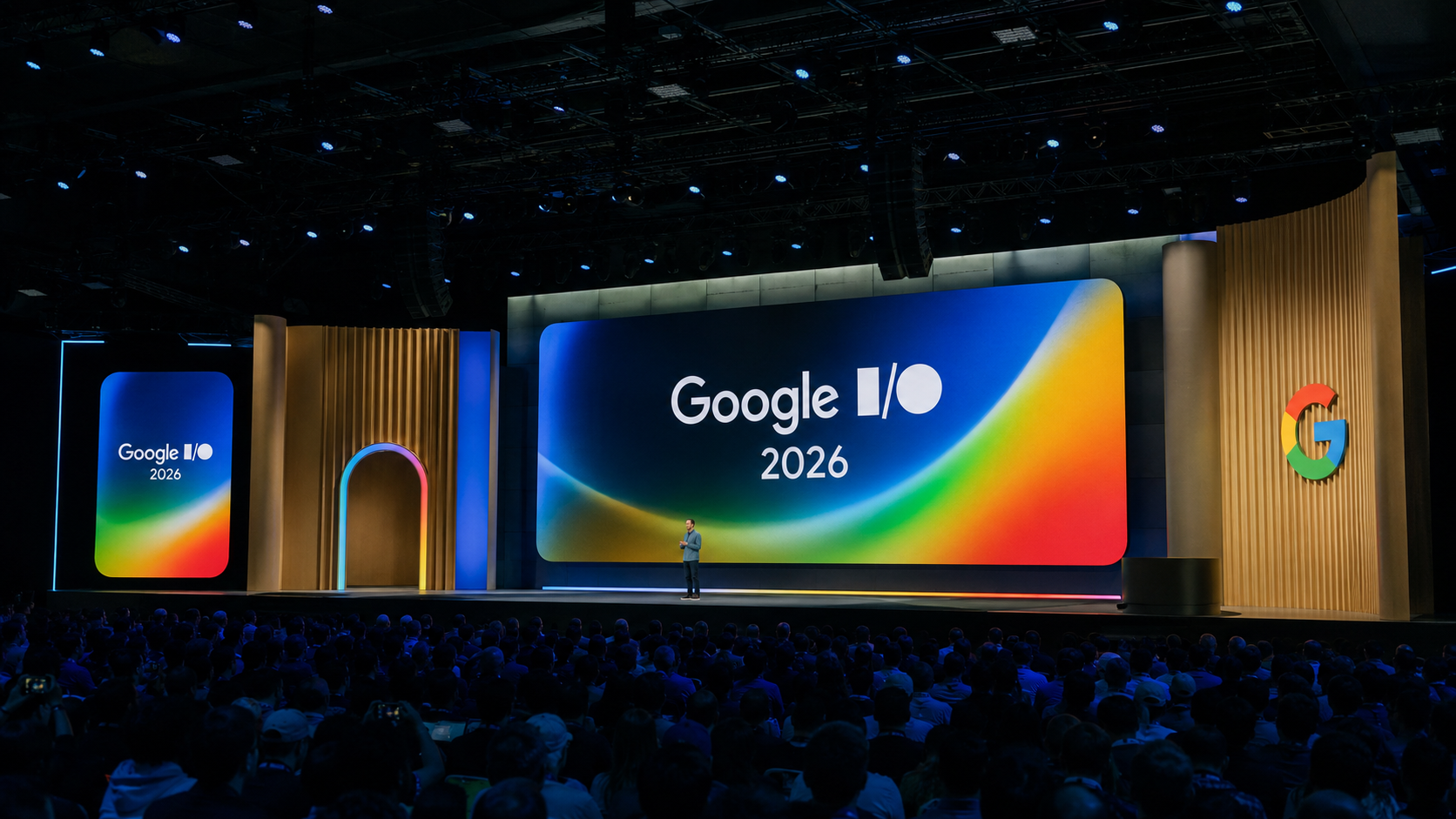
Google’s annual developer extravaganza, Google I/O 2026, kicked off on May 19 with one of its most packed keynotes yet. From a supercharged Gemini AI model to Android 17 upgrades and the long-awaited debut of Android XR smart glasses, this year’s event proved that Google is going all-in on artificial intelligence across every layer of its ecosystem. Whether you’re a developer, a gadget enthusiast, or just someone who uses Google Search, here’s everything you need to know.
What Is Google I/O 2026?
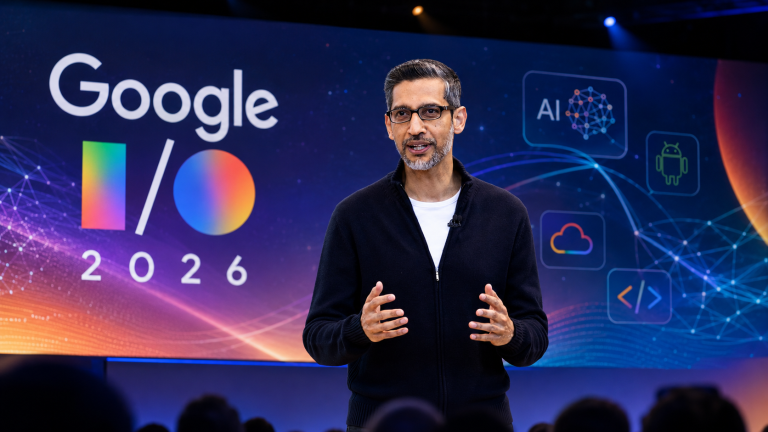
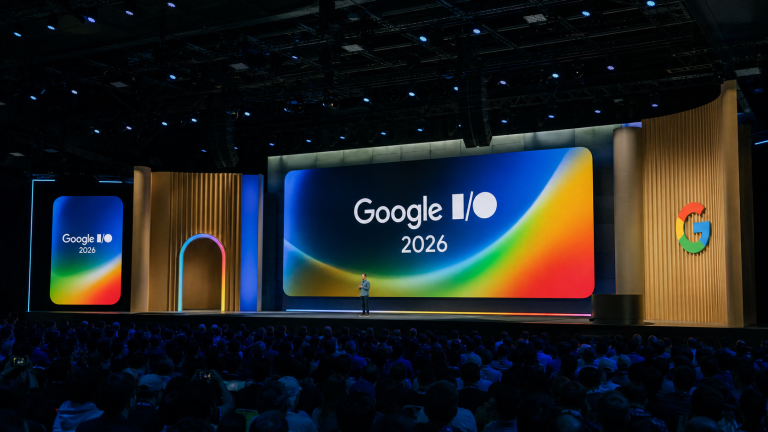
Google I/O is Google’s flagship annual developer conference, held at the Shoreline Amphitheatre in Mountain View, California. The event serves as Google’s biggest stage to announce product updates, unveil new AI capabilities, and set the direction for its entire product roadmap. I/O 2026 began May 19 at 10 a.m. PT, with the main keynote livestreamed globally at io.google. This year’s theme: AI, everywhere and for everyone.
Gemini Gets Smarter: The Next-Generation AI Model
The centerpiece announcement of Google I/O 2026 was undoubtedly the next major evolution of Gemini, Google’s flagship AI model. A newer, significantly more capable version is expected to anchor the entire product lineup — from Search and Workspace to Android and beyond. The upgrade signals Google’s intent to push agentic AI to the forefront: systems that don’t just answer questions but actively complete tasks on your behalf.
Gemini Live Gets New Voice Models
Pre-event leaks revealed something exciting on the voice side. A hidden model selector inside the Google App reportedly exposed seven previously unreleased Gemini Live voice models under internal testing — with codenames like “Capybara” and “Nitrogen.” One of these models identified itself as Gemini 3.1 Pro during testing, representing a notable step above the Flash Live model currently in use. Testers noted meaningful behavioral differences including improvements in memory, fact-checking, and location-awareness. The infrastructure is reportedly already built — a public rollout may be imminent.
Gemini Omni: The New AI Video Generation Engine
On the video creation front, a new model called Gemini Omni has been quietly surfacing for select users ahead of the event. Built on Google’s Veo foundation, Gemini Omni is described as capable of in-chat video editing, template-based creation, and full video remixing. Early demo footage showed impressive output quality — though the model is reportedly computationally intensive, with some users burning through 86% of their daily AI Pro plan allowance on just two short clips.
Android 17: What’s New and What’s Changing
Google has been rolling out Android 17 beta builds since February 2026, with a final public release expected in June or July — ahead of the annual Made by Google Pixel hardware event in August. For more details, visit the official Google Blog. While the beta has been relatively light on headline features, one notable addition is App Bubbles, a floating window system that gives users quick access to apps without fully switching context.
Ahead of I/O, Google hosted a dedicated “Android Show: I/O Edition” event to preview the platform’s direction. Key themes include deeper Gemini Intelligence integration directly into Android, making the OS more proactive, context-aware, and capable of handling tasks before users even ask.
Gemini Intelligence Built Into Android
The concept of Gemini Intelligence for Android is designed to transform how your phone works. Rather than being a standalone assistant you invoke manually, Gemini Intelligence would run as an ambient layer — anticipating your needs, summarizing notifications, drafting replies, and managing your schedule without constant prompting. This is the next evolution of what Google has been building since Bard, and it’s finally taking shape as a core Android feature rather than an add-on.
Android XR Smart Glasses Are Finally Here
One of the most talked-about announcements at I/O 2026 was the formal reveal of Android XR smart glasses. After being teased as a concept at last year’s event and confirmed in December 2025, the glasses are now moving toward a real commercial launch. Google is building two distinct products under the Android XR umbrella:
- Display-free AI Glasses: Equipped with a camera, speakers, and microphones, these enable hands-free Gemini interaction in a form factor similar to Meta’s Ray-Ban smart glasses. Confirmed for 2026 launch.
- Display-equipped XR Glasses: The more ambitious product, featuring an in-lens display that can privately surface navigation directions, live translation captions, and other contextual information — visible only to the wearer. Launch timeline for this version is still unconfirmed.
Both products are being developed in partnership with Samsung, Gentle Monster, and Warby Parker, and run on Android XR — the same operating system powering Samsung’s Galaxy XR headset that launched in October 2025.
Android XR Developer Platform
For developers, I/O 2026 is expected to mark the opening of the full Android XR development toolkit. Google’s own design documentation suggests the platform is built around creating interfaces that feel like a natural extension of human perception. This could unlock an entirely new category of applications purpose-built for spatial computing and wearable AI.
Aluminium OS: Google’s New Laptop Operating System
Google is also expected to shed more light on Aluminium OS (also stylized as Aluminum OS), a brand-new operating system aimed at consumer laptops. Unveiled through the “Googlebook” — a new AI-first laptop unveiled at The Android Show — Aluminium OS is not ChromeOS, and it’s not Android. Instead, it represents a fresh attempt to bring a consumer-grade, AI-native desktop/laptop experience to a broader audience.
Android Ecosystem President Sameer Samat has confirmed the platform is on track for a 2026 debut. Importantly, ChromeOS is not being discontinued — Google views the two platforms as parallel strategies targeting different segments of the laptop market.
The Future of Google Search in an AI World
Google Search is transforming rapidly. I/O 2026 is expected to bring major updates to AI Mode and AI Overviews, the features that now sit front-and-center in many search results. There’s speculation that AI Mode could eventually become the default search experience for all users — a move that would represent a seismic shift in how people interact with information online.
Google will need to balance innovation with user trust, especially as concerns around AI hallucinations and source attribution continue to grow. Still, the direction is clear: Search is evolving from a link aggregator into an AI-powered answer engine.
Agentic AI: The Biggest Shift of 2026
Perhaps the most significant underlying theme of Google I/O 2026 isn’t any single product — it’s the paradigm shift toward agentic AI. Rather than AI that responds to queries, agentic AI proactively acts on your behalf. It books your calendar, responds to emails, fills out forms, and even navigates apps — all with minimal human input. Google has been building toward this for years, and I/O 2026 is shaping up to be the moment this vision becomes a practical, everyday reality for users.
Google I/O 2026 FAQ
When did Google I/O 2026 take place?
Google I/O 2026 began on May 19, 2026, at 10 a.m. PT. The event was livestreamed at io.google and ran for two days, featuring keynotes, developer sessions, and Dialogues panels.
What was the biggest announcement at Google I/O 2026?
The biggest announcement was the next-generation Gemini AI model, featuring enhanced reasoning, new voice capabilities (Gemini Live), and deeper integration across Android, Search, Workspace, and the new Android XR platform.
What are Android XR Glasses?
Android XR Glasses are Google’s new AI-powered smart glasses running on the Android XR operating system. They come in two versions: a display-free model for hands-free Gemini access, and a more advanced version with an in-lens display for private AR overlays like navigation and translation.
Will Android 17 be released in 2026?
Yes. Android 17 is expected to launch in June or July 2026, ahead of the Made by Google Pixel hardware event. Beta versions have been available since February 2026.
What is Aluminium OS?
Aluminium OS is a new Google operating system designed for consumer laptops. It is distinct from both ChromeOS and Android and was previewed at The Android Show through a new device called the Googlebook. It targets a mainstream laptop audience with an AI-native experience.
How is Google AI Mode changing Search?
Google’s AI Mode transforms traditional search results into AI-generated, conversational answers with source citations. It may become the default search experience in the near future, replacing the classic blue-link format for most users.
What is Gemini Omni?
Gemini Omni is a new AI video generation and editing model from Google, reportedly built on the Veo foundation. It supports in-chat video editing, template creation, and video remixing, and is expected to integrate with YouTube and Google’s creative tools.
Conclusion
Google I/O 2026 marks a pivotal moment in the company’s transformation from a search and advertising giant into a fully AI-native platform company. With a more powerful Gemini at the center, Android getting genuinely intelligent, XR hardware finally becoming real, and a new laptop OS entering the scene, Google is making its boldest moves yet. Whether these promises translate into everyday reality for users will define Google’s next chapter — but if I/O 2026 is any indication, the future is arriving faster than expected.
Stay tuned to NextGenBulletin AI Updates for continued coverage of Google I/O 2026 announcements, hands-on reviews, and in-depth analysis.