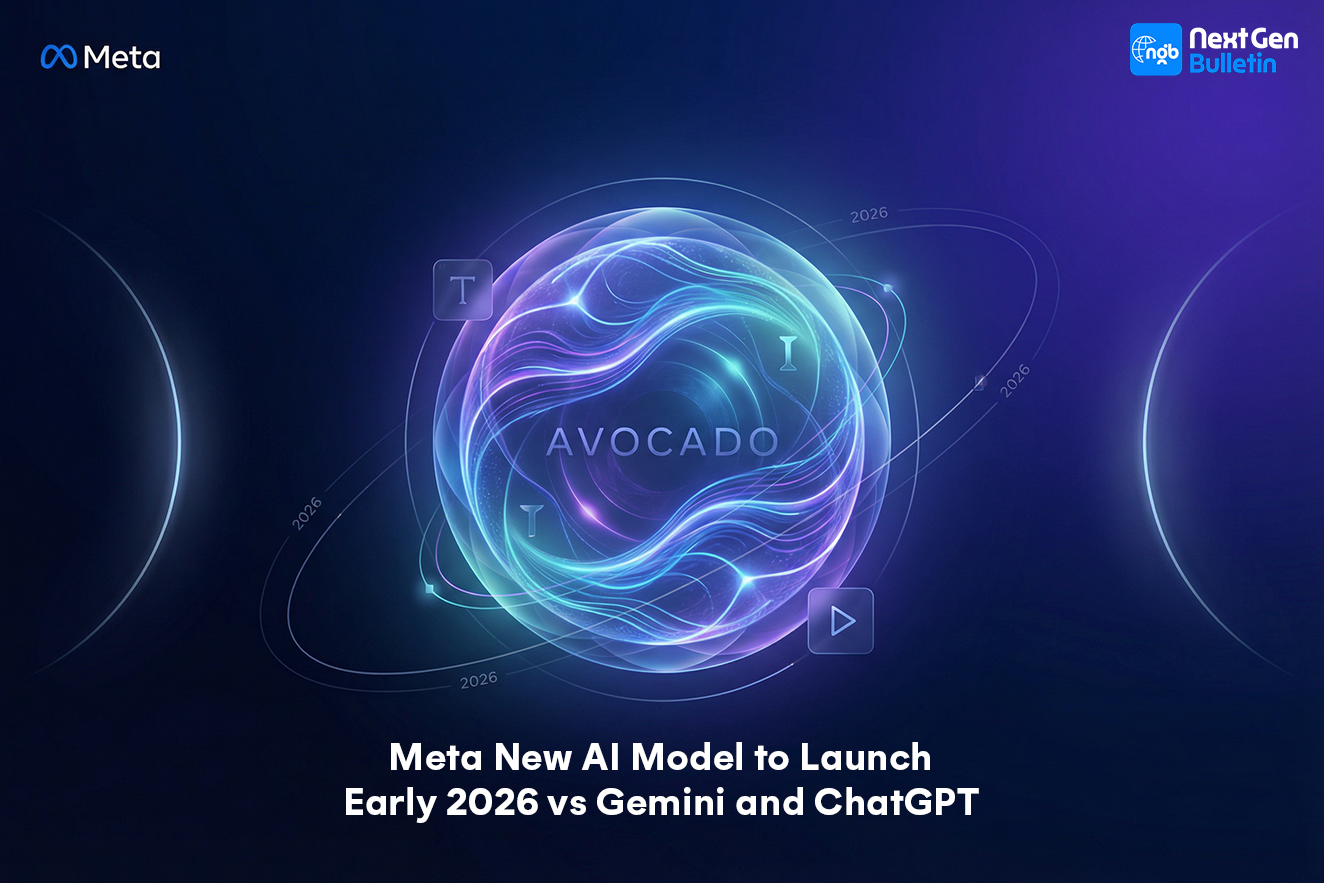

Meta New AI Model Set for Early 2026 Release
Meta Platforms is reportedly gearing up to introduce a Meta new AI model in early 2026 designed as a direct Google Gemini competitor and ChatGPT competitor in the expanding generative AI landscape. According to sources close to the matter, the social-media giant’s Superintelligence Labs is behind the development, which is expected to push Meta deeper into frontier AI capabilities with its next flagship AI system.
The forthcoming offering is not simply an incremental upgrade to existing chat and assistant tools, but rather a strategic leap aimed at reversing Meta’s lagging position compared with rivals. With OpenAI’s ChatGPT and Google’s Gemini models dominating public attention, Meta’s pivot toward a robust alternative reflects mounting internal urgency to regain technological influence and market credibility.
Industry analysts see the Meta new AI model as a critical bet in a broader race for AI supremacy, one where consumer ecosystems and enterprise integration increasingly depend on breakthrough model performance.
Avocado AI Model: The Heart of Meta’s Strategy
One name emerging in leaked reports is the Avocado AI model, an internal codename insiders believe could represent the core architecture of Meta’s upcoming system. While details remain under wraps, Meta is said to be blending large-language-model competencies with rich multimodal capabilities, making Avocado a contender in both text and image/video generation tasks.
The Avocado AI model is rumored to integrate:
- Enhanced reasoning and conversational fluency
- Multimodal input support (text + image + potentially video)
- Tools for summarization, enterprise tasks, and knowledge retrieval
- Stronger alignment and safety guardrails compared to prior Meta models
Meta has not officially confirmed “Avocado” as the final product name. However, the internal reference highlights a shift toward more consumer-facing, brandable AI models that can power not just chat but broader AI ecosystems within Meta’s platforms.

Meta Superintelligence Labs Driving Innovation
The development of this next system is being driven by Meta Superintelligence Labs, the division tasked with pushing Meta’s frontier AI research. Established as part of a sweeping reorganization in 2025, Superintelligence Labs was designed to give a dedicated research organization more autonomy to pursue long-term AI breakthroughs without being encumbered by Meta’s legacy product bureaucracy.
Within the labs, researchers are pursuing fundamental model architectures, alignment and safety research, and advanced multimodal systems. The initiative has already recruited AI talent from leading research institutions, Web2 AI groups, and even competitors. This effort reflects Meta’s recognition that catching up to OpenAI’s ChatGPT and Google’s Gemini will require sustained investment and intellectual capacity.
Sources say that internal evaluation cycles for the Meta new AI model have progressed to the phase where beta trials and API encapsulation are beginning a sign that the early 2026 AI launch timeline is ambitious but increasingly plausible.
Google Gemini Competitor: A Strategic Objective
One of the clearest ambitions for Meta’s new model is to function as a Google Gemini competitor. Gemini, Google’s family of multimodal and generative models, has gained traction thanks to its integration across Google Search, Bard, Workspace, and Android devices. Comparatively, Meta’s AI presence has been more fragmented, often tied to research papers or platform-specific assistants rather than a unifying flagship system.
Meta’s upcoming model aims to change that by offering:
- Richer multimodal response generation
- Integrated reasoning and task automation
- Expanded APIs for third-party developer ecosystems
- Competitive performance in benchmarks against Gemini releases
If Meta’s new model can match or surpass Gemini’s capabilities, particularly in contextual understanding, real-world reasoning, and API flexibility, it would represent a significant shift in the competitive landscape.
ChatGPT Competitor Status and Market Impact
In addition to competing with Gemini, Meta’s project is positioned as a ChatGPT competitor, targeting both consumers and enterprise users who rely on AI assistants for productivity, creativity, coding, research, and automation. ChatGPT’s success in mainstream adoption has set a high bar for generative performance, reliability, and integration. Meta’s new model must therefore be both powerful and practical to make headway.
Analysts suggest Meta new AI model could differentiate itself by:
- Deeper integration with social and messaging platforms
- Innovative multimodal capabilities (e.g., tighter integration with vision and potential future AR/VR interfaces)
- Customizability and tools tailored to content creators
- Enhanced privacy and user control for user data
Given Meta’s entrenched user base across Facebook, Instagram, WhatsApp, and Threads, the company has a unique advantage in distributing its AI once ready.
Early 2026 AI Launch Expectations and Challenges
The projected early 2026 AI launch puts Meta on an accelerated timeline, one that carries both promise and risk. On the promise side, a well-received model could recalibrate Meta’s AI narrative, attracting developers, enterprise partners, and consumers who have gravitated toward OpenAI and Google.
On the risk side, building a flagship system capable of competing with the likes of ChatGPT and Gemini requires overcoming several challenges:
- Model alignment and safety: Ensuring the system behaves responsibly and securely at scale
- Computational infrastructure: Investing in the hardware and cloud partnerships necessary to support large-scale inference
- Developer ecosystem engagement: Encouraging third-party developers to adopt and build on the model’s APIs
- Balanced product integration: Ensuring the new AI model enhances rather than disrupts user experience across Meta platforms
If Meta meets these goals, industry watchers say the result could be one of the most consequential AI launches of the decade.
Bottom Line
Meta’s push toward a Meta new AI model slated for early 2026 is one of the most hotly anticipated developments in generative AI. With the internal “Avocado AI model” and backing from Meta Superintelligence Labs, the company is positioning itself to rival both Google Gemini and ChatGPT.
Whether Meta’s next big AI leap will match or exceed its rivals remains to be seen, but as competition intensifies, users and developers alike prepare for a new era of AI innovation.
For expert tracking of next-gen AI models and launch updates, visit our homepage.


