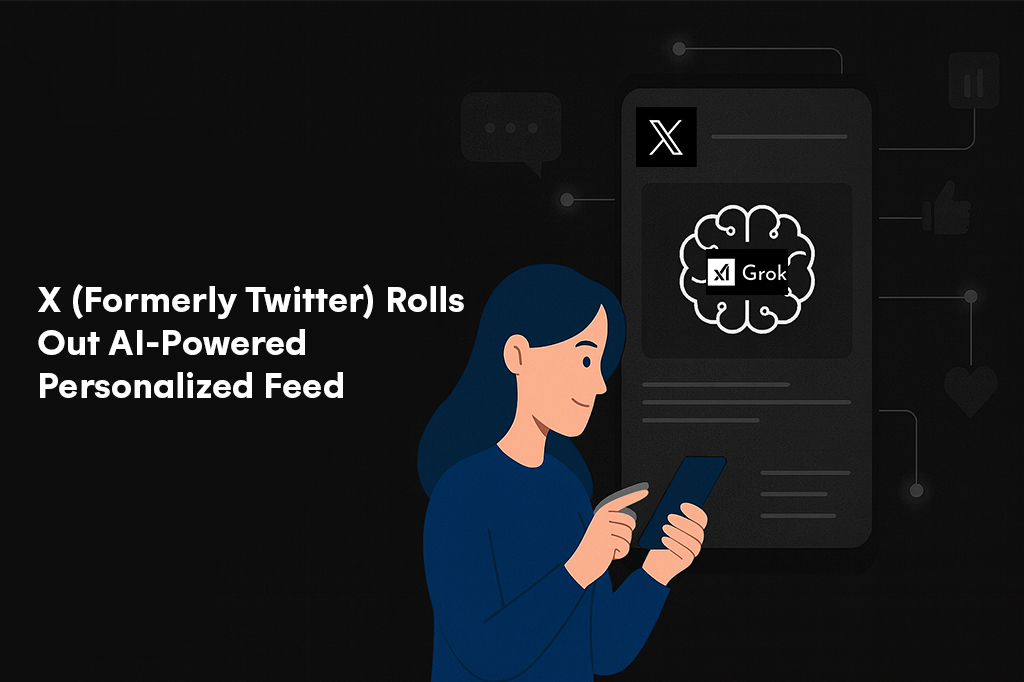

X, formerly ‘Twitter,’ is cooking up one of its largest overhauls ever: a completely X AI Feed which can also be tailored to individualized timelines for each user. Powered by Grok AI, the update is part of an effort to redefine how media is consumed on the platform and represents the latest phase in Elon Musk’s vision for X as a “global town square.”
A Major Twitter Algorithm Update
The Twitter algorithm has long been weighted toward a combination of chronological posts and ranking based on engagement. But the new X personalize algorithm goes a step further by incorporating state-of-the-art AI models alongside user input. The X AI, or so called learning algorithm, powered feed will change on the fly, with every user’s timeline being personalized and flexible.
Musk has suggested that the system will be “purely AI” by November 2025 and receive regular open-source updates. That is to say, users and developers will now have unmatched visibility into algorithm behavior – a unique characteristic of X compared with its competitors.

How Does X’s New A.I. Algorithm Work?
Unlike previous ranking systems, the new model combines implicit signals like whether a user has liked or spent time watching a video with explicit input taken from the users. Through Grok AI on X, users can “prompt” their feeds by telling the algorithm what they want more or less of. For example, a user interested in tech news can request more AI updates, while filtering out unrelated entertainment posts.
This degree of customization reflects a broader trend in personalized social media feeds, where platforms prioritize relevance and control over passive consumption.
X Timeline Changes and User Control
The update introduces a new level of X timeline changes. Instead of being limited to who they follow, users will discover content across the platform based on their expressed interests. This bridges the gap between “social graph” feeds (content from people you follow) and “interest graph” feeds (content based on what you like).
For many, this raises the question:
How different is the new X from Twitter’s old algorithm?
The answer lies in flexibility. While Twitter prioritized engagement signals from accounts you followed, the X personalized timeline can surface posts from any creator if it aligns with your profile.
Pros and Cons of X’s AI-Powered Feed
The benefits are clear: more relevant content, fewer irrelevant posts, and dynamic feed adjustments. For creators, this could mean better visibility if their work resonates with niche interests. For users, it’s a chance to curate a timeline that feels more aligned with personal passions.
But there are downsides. Critics warn of echo chambers, where users only see content that reinforces their views. Others worry that the reliance on explicit instructions may discourage casual users from shaping their feed.
X vs TikTok: Competing Algorithms
Industry observers have compared the X AI feed vs TikTok algorithm, noting similarities in how both platforms emphasize content discovery. However, X’s model gives users more direct input, a move Musk claims will make the platform more transparent and user-driven.
What’s Next for X?
With the Elon Musk X algorithm update, the company is betting big on personalization as the future of social media. By merging AI-driven insights with user control, X hopes to not only improve engagement but also redefine how people experience online conversations.
As the rollout approaches, one thing is clear: the new X features in 2025 are designed to put the user at the center of the feed. Whether this will increase satisfaction or spark new debates over algorithm bias, remains to be seen.
Frequently Asked Questions: X’s AI-Powered Personalized Feed
Q: When exactly is this new AI feed rolling out?
A: Musk’s shooting for November 2025 to have the feed running on pure AI. That’s the target date anyway. But here’s the thing—they’re not flipping a switch overnight. You’ll probably notice your timeline acting differently before then as they test things out and tweak the system. It’s more of a gradual transformation than a single launch day.
Q: What is Grok AI, and why does it matter for my feed?
A: Grok AI is basically X’s homegrown intelligence system. It’s the engine running under the hood of your new feed. Instead of the old algorithm that just looked at likes and retweets, Grok actually learns your preferences and adapts in real-time. That’s the big shift here—your timeline becomes this living thing that evolves with you.
Q: Do I have to do anything to customize my feed, or does it happen automatically?
A: You’ve got options. The lazy route? Do nothing. Grok will watch what you interact with and adjust accordingly. But if you want to take the wheel, you can actually talk to your feed. Seriously. Tell it “show me more AI news” or “I’m tired of seeing celebrity drama.” It’s like having a conversation with your timeline, which is pretty wild when you think about it.
Q: Will I still see posts from the people I follow?
A: Yeah, but your feed isn’t married to your follow list anymore. Think of it this way—the old Twitter showed you mostly what your friends were saying. This new setup shows you what your friends are saying AND interesting stuff from people you’ve never heard of, as long as it matches what you’re into. It’s less about who you know, more about what you care about.
Q: How is this different from the old Twitter algorithm?
A: Night and day, really. Twitter’s old algorithm was basically “here’s what the people you follow are posting, ranked by popularity.” The new X system can grab content from literally anyone on the platform if it thinks you’ll find it valuable. Plus—and this is huge—you can directly tell it what you want. The old algorithm just guessed based on your clicks. This one actually listens when you speak up.
Q: Can I opt out and go back to a chronological feed?
A: That’s the million-dollar question, isn’t it? The article doesn’t say, and honestly, given how all-in X is going with this overhaul, I wouldn’t bet on them keeping the old chronological option around. But we won’t know for sure until the rollout happens. Worth keeping an eye on.
Q: What does “open source” mean for the algorithm?
A: Here’s where it gets interesting. Most social media companies guard their algorithms like state secrets. X is planning to regularly publish theirs for anyone to examine. Developers, researchers, even you if you’re tech-savvy—you’ll be able to look under the hood and see exactly why certain posts show up in your feed. It’s unprecedented transparency for a major platform.
Q: Won’t this create echo chambers where I only see what I already agree with?
A: You’re touching on the biggest criticism people have raised. If you tell the algorithm “only show me stuff I agree with,” well… that’s exactly what you’ll get. The filter bubble could get real. But here’s the flip side—at least you’re aware you’re building it, unlike other platforms where it happens invisibly. The responsibility shifts to you. Use that power wisely, maybe?
Q: How does this compare to TikTok’s algorithm?
A: Both platforms are obsessed with showing you things you’ll love, even from strangers. But TikTok is like a mind reader—it figures you out by watching everything you do, then serves up content without asking permission. X is trying something different by letting you actually coach the algorithm. You can say “more like this, less like that.” It’s more collaborative, less creepy stalker vibes.
Q: I’m a content creator on X. How will this affect my reach?
A: Could be your lucky day. Under the old system, you were mostly limited to your followers and whoever they retweeted you to. Now? If you’re making killer content about underwater basket weaving and someone tells their feed “show me more underwater basket weaving,” boom—you could pop up in their timeline even if they’ve never heard of you. Niche creators might actually have an advantage here.
Q: What happens if I don’t give the algorithm any instructions?
A: It’ll still function, just on autopilot. Grok will watch what you like, what you linger on, what you skip past—all the usual signals. You’ll get a personalized feed, but you’re basically letting the AI guess what you want instead of telling it directly. Think of it like using predictive text versus typing out exactly what you mean. Both work, but one’s more precise.
Q: Is X becoming more like a discovery platform than a social network?
A: That’s actually a sharp observation. X is definitely blurring the lines. The old Twitter was about following your friends and seeing what they had to say—classic social networking. This new version wants to show you the most interesting content on the entire platform based on your interests, whether you’re connected to the creator or not. It’s less “let’s hang out with people we know” and more “let’s explore what’s out there.” Whether that’s better or worse depends on what you’re looking for, I guess.